
# Mini-Program Development History
A Mini-Program is a brand new way to connect users and services. It can be easily accessed and distributed while offering an excellent user experience.
# What is a Mini-Program
In the "WeChat Open Class Pro" speech in 2016, Zhang Xiaolong, President of the WeChat Business Group, described the prospects and future of Mini-Programs as follows:
"A Mini-Program is an application that can be used without downloading and installing. It realizes the dream of 'applications at your fingertips.' Users can open the application by scanning a QR code or searching. It also embodies the concept of 'use and leave.' Users do not need to worry about installing too many applications. Applications will be everywhere, ready to use anytime, yet require no installation or uninstallation."
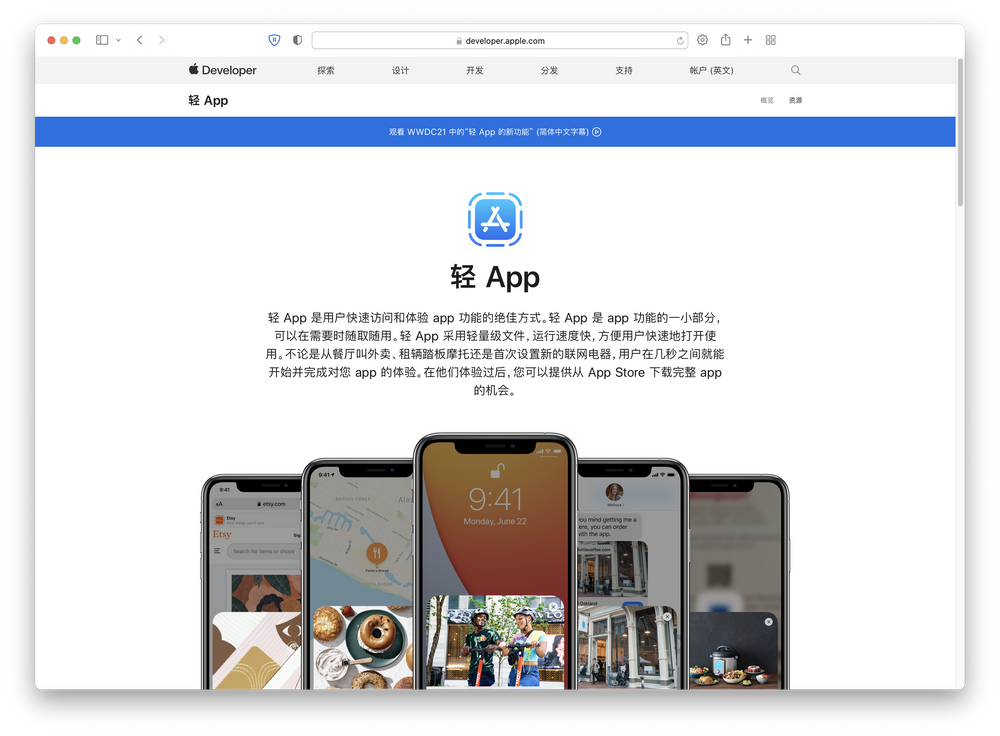
At the "WWDC Apple Worldwide Developers Conference" in 2020, Lightweight Applications were highlighted and promoted as a major feature of iOS 14:
"An App Clip is a lightweight application that allows users to access and use part of an app's functionality without installing the full application on their iPhone or iPad. They are focused on handling simple and quick tasks."
Whether it's Zhang Xiaolong's somewhat artistic description of "WeChat Mini-Programs" or the description of the role of "Lightweight Applications" within the iOS ecosystem at WWDC, we can generally understand the original intention behind the birth of Mini-Programs. If we fast-forward from these two launch events to today, we find that Mini-Programs are no longer limited to "use and leave" and "quick access." Various types of Mini-Programs have blossomed, including tool Mini-Programs, content Mini-Programs, transaction Mini-Programs, live streaming Mini-Programs, and more—truly something for everyone.
Let me try to illustrate with my own daily work routine. In the morning when I leave for work, I open "Tianfu Health Code" to scan the venue code for the subway and show my health code to the security check. Around 11:30 AM, I use "Meituan" or "Ele.me" to order a lunch. After lunch, I open "Animal Restaurant" to see how many small fish treats the kitten has earned. During the afternoon meeting, I use "Tencent Docs" to review the meeting minutes. Just before getting off work, I use "Dingdong Maicai" to buy ingredients for dinner. When cooking dinner at home, I use the "Lanfan App" to see how to make the tomato and fatty beef rice I want to eat.
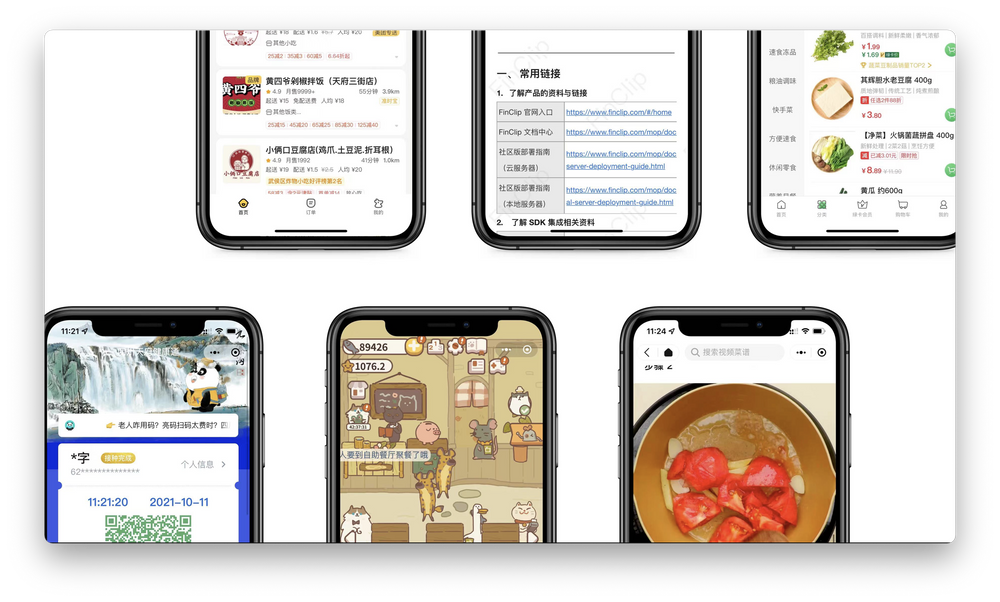
Today, when we talk about Mini-Programs, we are no longer specifically referring only to WeChat Mini-Programs. Various platforms have launched their own dedicated Mini-Program platforms. Whether it's Alipay, ByteDance, Meituan, Baidu, or other major internet companies, they have all introduced their own exclusive Mini-Program platforms. Based on their respective ecosystem businesses, they provide traffic support for Mini-Programs, hoping that users and developers will choose to develop Mini-Programs within their own platforms.
As the Mini-Program business intensifies, more and more traffic is being directed into the Mini-Program battlefields of internet giants. However, during this process, complaints and controversies about the "closed, non-transparent" nature of these battlefields have gradually emerged. Countless enterprises hope that their own applications can also have the capability to run Mini-Programs, aiming to resist the situation where Mini-Programs are drawn into battlefields controlled by oligopolies. But "easier said than done." The effort and time required to rapidly complete the underlying and container R&D for Mini-Programs cannot be accomplished in a short period.
In fact, Mini-Programs can be understood as a specific subset of "Mobile Applications." According to the vision of "equality and transparency," Mini-Programs should not exist solely within WeChat. Those applications we don't use frequently could be re-optimized as Mini-Programs. We could open relevant Mini-Programs through various specialized applications, thereby reducing the burden of "overly heavy applications."
Of course, there are some characteristics of Mini-Programs that we need to note:
- Mini-Programs do not have the ability to be "followed." Operations for acquiring traffic and retaining users need to be completed by standalone applications or other channels.
- Mini-Programs do not have the ability to "push messages or broadcast messages." Operations for reaching users and delivering messages need to be completed through other channels.
- Mini-Programs do not have the ability for "cross-App sharing." Therefore, the sharing and access paths for Mini-Programs need to be considered in advance during product design, rather than putting all eggs in one basket.