# FinClip Mini-Program App Market: Breaking Through the APP Traffic Growth Dilemma
Surviving may be the most important underlying theme of 2021.
Is your company's APP still alive in 2021? Will it still be alive in 2022?
Has your company's active user base continued to grow in 2021? Or is the rate of shrinkage at least manageable?
Every year is tough, yet every year we get through it. But after 2021, can we still get through it?
Switching perspectives — as an ordinary consumer (C-end user), how long has it been since you last downloaded a new App?
Has the number of APPs you use daily gradually shrunk to 5–8?
The "Super App" concept has already been proven as a viable practice. Swept up in this trend, what room is left for ordinary Apps to survive?
When you can't defeat the enemy, why not become the enemy?
So how do you enrich your APP's content and make yourself the next "Super App"?
Or perhaps you're determined to build a small and beautiful tool? But after a tool gains enough user traffic, it also has to consider monetization. How to monetize?
FinClip proposes an interesting solution:
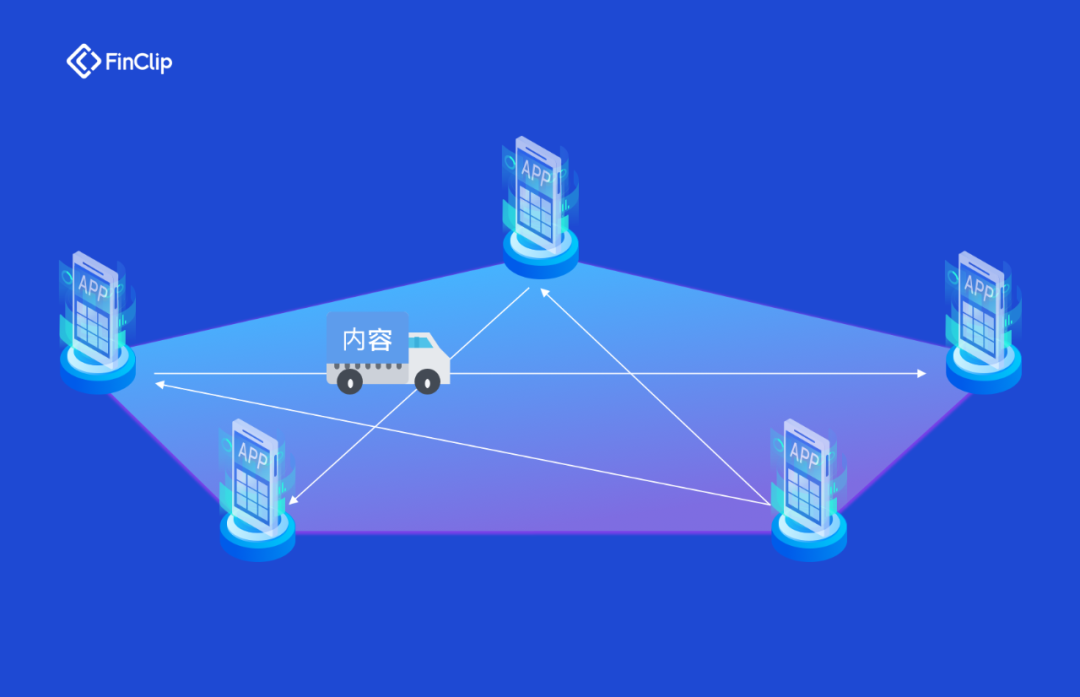
Build a "Mini-Program App Market" that provides both developers and enterprise Apps with a platform for showcasing and sharing.
**
Why does an APP need such a platform
An App's links are an economic calculation. For an App to provide content and implement new features, the corresponding costs are new labor costs and marketing expenses. The entire R&D expenditure will fluctuate based on the size of the feature and the market plan.
These costs are unavoidable. And once a decision fails — if the newly invested feature simply isn't what users need — then the entire upfront investment becomes a massive sunk cost, irretrievably lost as time goes by.
Is there a way to reduce trial-and-error costs? If a feature already has a ready-made implementation on the market, why can't the App simply "reuse" it directly?
In practice, most Apps directly bring in external content that typically has traffic-driving effects. For example, directly driving downloads for other Apps, or directly guiding users to purchase a specific product. If the user converts, it succeeds; if not, it fails — the result is extremely binary. Throughout the entire process, for the App itself, it's merely a simple revenue change — nothing of its own can be accumulated or incubated.
On the other hand, if you see a competitor App with a great feature and want to introduce it, you can only develop it from scratch yourself. The R&D cost won't be reduced just because similar products exist on the market.
Therefore, the "Mini-Program App Market" proposed by FinClip is designed to solve this problem. That is: if similar products or services already exist on the market, why not directly reference the other party's products and services? Why must you develop everything from scratch? Can't trial-and-error costs be further reduced?
How does an APP leverage the platform?
We all know that App development follows either the native or Hybrid path — especially the latter, hybrid development, which has become the current mainstream technology. Most Apps use a native + H5 implementation approach.
When we discover that another App has a great feature, if that feature is implemented in H5, then the "reuse" of the entire product is a relatively smooth process. But what if we want to pursue a better user experience and adopt native development? With native development, there's no way for other Apps to quickly reuse it.
In light of this, FinClip's linking approach is: leverage the unique technical form of Mini-Programs to enable different Apps to quickly "reuse" the same product.
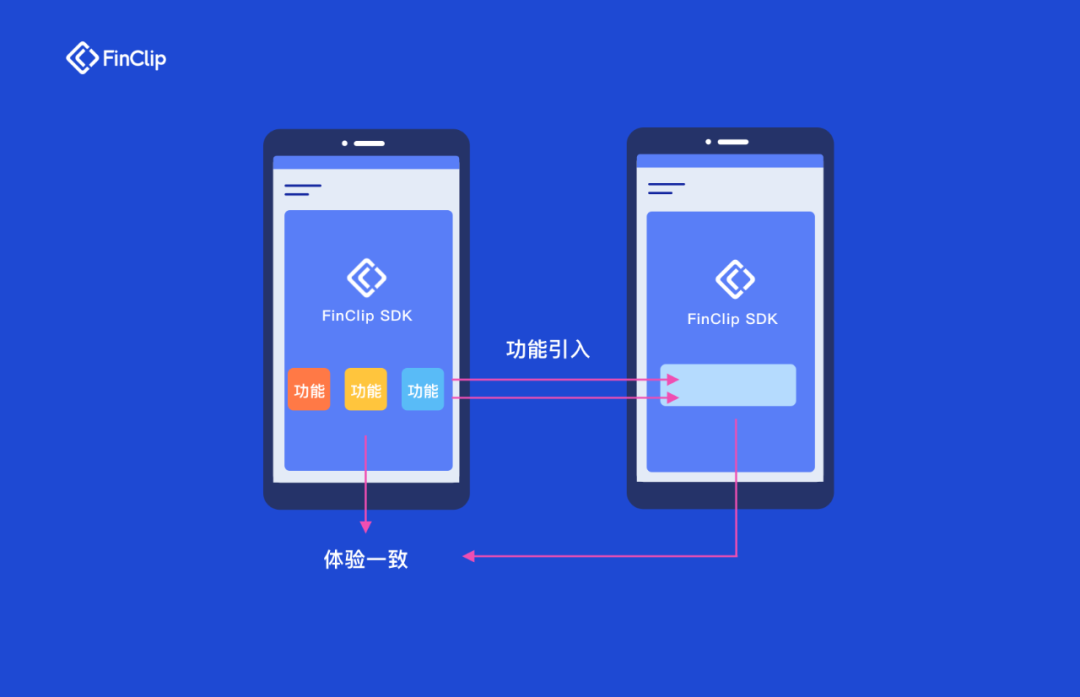
Thanks to the unique capabilities of the FinClip SDK + Mini-Programs, by introducing the same SDK into a new App and being compatible with mainstream Mini-Program syntax, any content or service completed as a Mini-Program can be fully "copied" from the original App to another App.
How to achieve the migration and replication of features?
For content developers, the natural demand is: to have their content seen and used by more people.
At this point, content producers only need to develop using WeChat Mini-Program syntax, and their content can appear in all Apps that include the FinClip Mini-Program SDK. Moreover, in these Apps, no cumbersome debugging is required — the feature completeness will be exactly consistent with the design specifications.
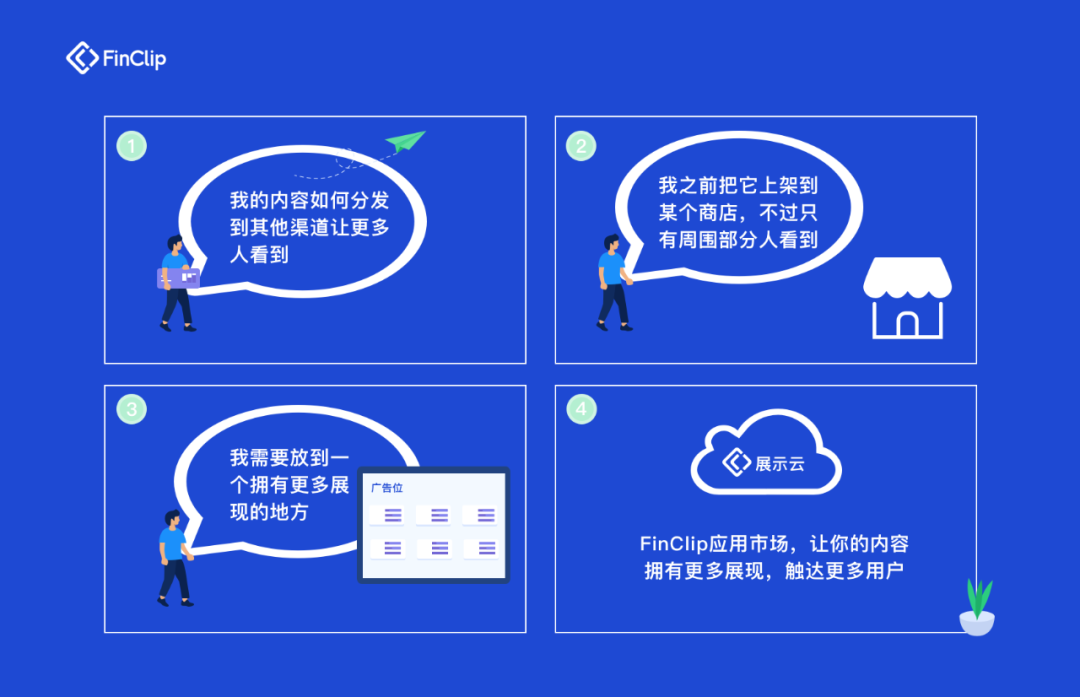
In other words, through the FinClip Mini-Program App Market network, we will achieve:
For Apps:
- The ability to discover more great products and features
- Low-cost introduction of new products and features, reducing their own trial-and-error costs
- Maintaining a more stable and better user experience within the App
For content producers:
- Develop using standard syntax — no need to learn anything new (WeChat Mini-Program)
- Push to the cloud so that more Apps can discover their content
- Standardized delivery — no secondary development or assistance from content producers is needed to complete the App integration process