# On the Path of Digital Transformation in the Insurance Industry, How to Turn "Traffic" into "Retention"
The sudden outbreak of the pandemic has brought far-reaching impacts to all industries and profoundly changed the internal and external environment for the development of China's insurance industry. With offline channels blocked, insurance institutions began to accelerate the digitization of sales and services, leveraging internet platforms to build ecosystem communities for customer acquisition, cultivate customer stickiness, maintain customer activity, and build multi-touchpoint omnichannel marketing capabilities.
On April 15, the China Insurance Innovation Conference was successfully held in Shanghai, bringing together hundreds of insurance enterprises including New China Life Insurance, Aeon Life, and Shanghai Life Insurance. FinClip attended as a mobile application solution provider for the insurance industry and shared its practices in the digital transformation and upgrading of the insurance industry.
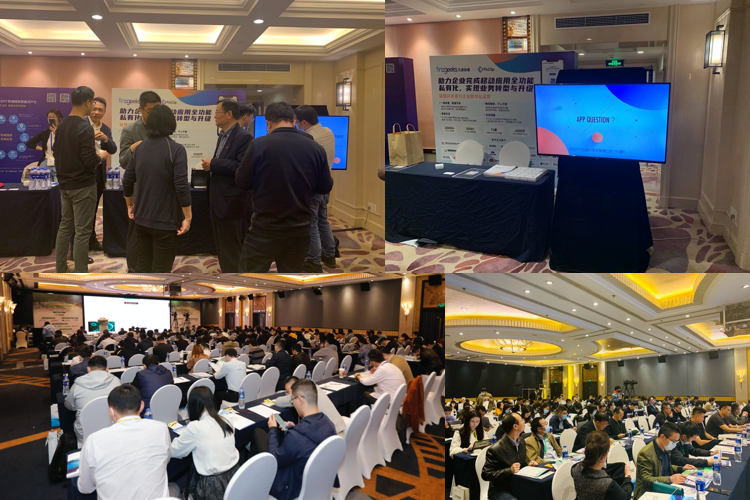
Yang Tao, co-founder of FinClip, was invited to attend and discussed "how insurance companies can rely on digital transformation and upgrading for both internal business efficiency and external industry ecosystems."
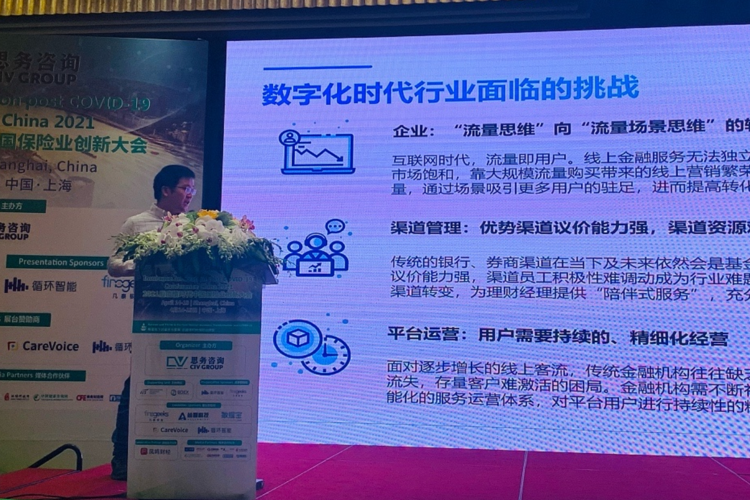
Yang Tao mentioned: Digital transformation in the insurance industry is actually a well-worn topic. Digital scenarios such as online insurance enrollment, online renewal, and online claims have long been applied in daily life. Many insurance enterprises are increasing their investment in digital transformation, actively embracing the internet, and leveraging technologies such as artificial intelligence and big data to integrate external technical resources and accelerate the industry's upgrade and iteration.
However, in daily applications, insurance digitization still faces numerous problems. The main issues are concentrated in three aspects: system architecture bottlenecks, lack of personalized services, and changes in connection methods. Under these multiple difficulties, the digital transformation of the insurance industry requires different types of participants to advance together, gradually promoting the comprehensive digital transformation of the upstream and downstream industry chain.
Direction 1: Lightweight Technical Services Accelerate the Digital Transformation Process
Generally speaking, the underlying system technical architecture of traditional insurance apps is designed based on upper-layer business requirements. Therefore, the core systems of traditional insurance apps are more oriented toward insurance business processes, emphasizing centralization and stability, and presenting strong coupling characteristics in architecture. However, this also exposes problems such as parallel throughput capacity, data processing capability, and the efficiency of information exchange and sharing between various systems.
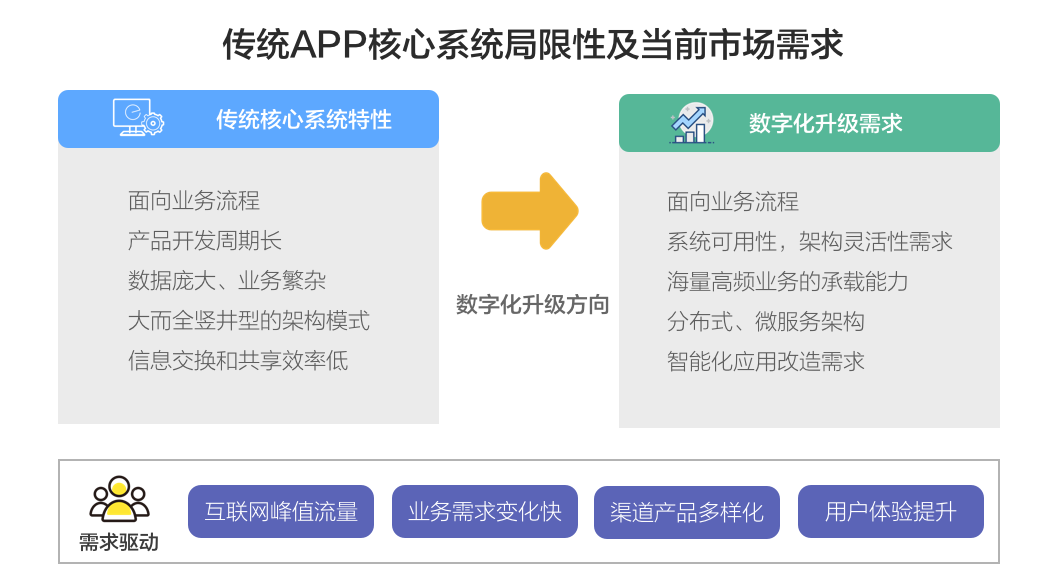
Based on the characteristics of insurance apps, FinClip proposed the concept of "Host" + "Fragments," enabling most business functions of insurance apps to be implemented as "Mini-Programs," with completely independent lifecycles, developed, tested, and gray-released independently of the App. Moreover, Mini-Program development goes through IT internal testing, business department UAT, compliance review, and operations deployment—the entire release process is fully digital and online. After release, gray release control continues to be used to gradually roll out the business function Mini-Program to a limited audience. All of this is imperceptible on the App side, and if any issues arise, the Mini-Program can be taken down instantly. At the same time, insurance business Mini-Programs can rapidly spread through social media, and combined with big data analytics, tap into the potential needs of massive internet users.
Direction 2: Create Data-Driven Personalized Customer Experiences
Under traditional business models, products and channels reign supreme, and customers can only passively choose products. However, under the internet model, customer-centricity is required, providing customized products tailored to each individual. Therefore, this expectation also imposes requirements for highly personalized insurance services.
So how can customized products tailored to each individual be achieved? With FinClip Mini-Program technology, digital scenarios of any granularity can be freely implemented, and through algorithms based on user personalized characteristics, individualized and intelligent recommendations can be achieved. Any Mini-Program on an insurance app can dynamically control push rules based on user profiles and customer segmentation. For example, a campaign marketing Mini-Program visible only to enterprise members in a specific region can be published through simple configuration without writing any complex application logic code.
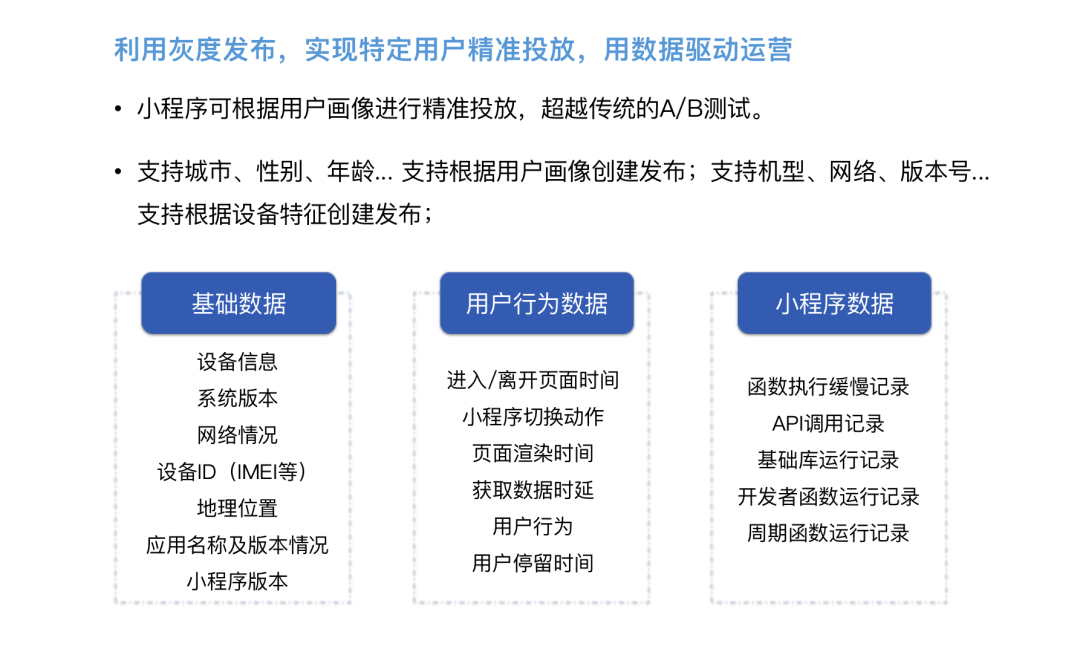
These personalized products and services can enhance customer experience, thereby improving customer retention rates and renewal rates.
Direction 3: The "Open Insurance" Concept Enhances App Core Competitiveness
In addition to using Mini-Program technology to extend their own business outward, insurance institutions must also proactively bring in external partner business functions. The benefits of doing so include not only enriching their own App business scenarios but also increasing user activity and retention rates. For example, an insurance app can host a large number of third-party consumption scenario, lifestyle service, and daily necessities Mini-Programs, ultimately achieving a customer-centric digital service loop while also building itself into a super app in a vertical domain.
Under the internet model, the insurance industry attracts user traffic by building an internet ecosystem with excellent experience, achieves cross-selling and cross-industry competition, and migrates insurance customers to other platforms within its own ecosystem, improving overall profitability.
FinClip also hopes to join hands with colleagues in the insurance industry, leveraging experience accumulated in ecosystems and online operations, to help insurance companies provide better services to users in traffic operations, content operations, campaign operations, and channel operations, thereby improving customer acquisition conversion and retention efficiency. Helping insurance companies and users achieve more efficient and warmer connections.