# How to Become a SaaS-Type Brokerage?

This article is 5,188 words in total, with an estimated reading time of 8 minutes.
"Software is eating the world." Come and see how a code-obsessed programmer, single-mindedly trying to solve every problem with code, fantasizes about building a digital brokerage. "Fantai Securities" is now open for business.
Treat Yourself as a SaaS Provider
Assuming no "historical baggage," we would of course treat ourselves as a technology company, providing software services to clients (whether institutional or retail) over the internet, letting them use our various tools to obtain services. In reality, a brokerage is naturally a SaaS provider. Although the software provided to clients may not be self-developed, clients only recognize us—and when problems arise, they naturally come only to the brokerage. Mobile stock-trading Apps, PC trading software, websites, intelligent bots on chat tools, various market data and information services, investment and wealth management tools, account analysis tools, direct market access (DMA) interfaces… all of these are the "software as a service" through which we open our doors to do business.
Under ideal conditions, we would build these services on a regulated, industry-recognized industry cloud, saving ourselves the pain of building our own data centers, setting up remote disaster recovery backups, or maintaining two-site three-center architectures.
Of course, regardless of whether the infrastructure layer is built on the cloud, our technical architecture must be guaranteed to be "cloud-native," enabling us to implement everything with elastic scaling, asynchronous, low-latency, and reactive technologies. We would also choose a "naturally" distributed trading system as our trading core.
DevOps and AIOps are of course standard for operations and maintenance. Operations automation and intelligence are the responsibilities we bear as a SaaS provider.
Keeping Pace with the Times — Embracing MarTech
Next, we will fully embrace Marketing Technology (MarTech)—the trinity of business management, marketing, and digital technology. This is the centerpiece of financial retail services and the main lever for our operations on the internet. Since the concept of MarTech emerged in 2008, it has grown globally into an industry of thousands of companies worth hundreds of billions of dollars. However, the vast majority of MarTech on the internet cannot be easily used by financial institutions, because such technologies are highly data-dependent and often involve customer identification and tracking. In a regulated industry where data privacy issues are extremely sensitive, they are not freely usable. But we believe this is exactly where innovation lies—whoever finds the intersection of RegTech (regulatory technology) and MarTech can surf the internet with confidence, expand territory, and conduct marketing and business development.
**
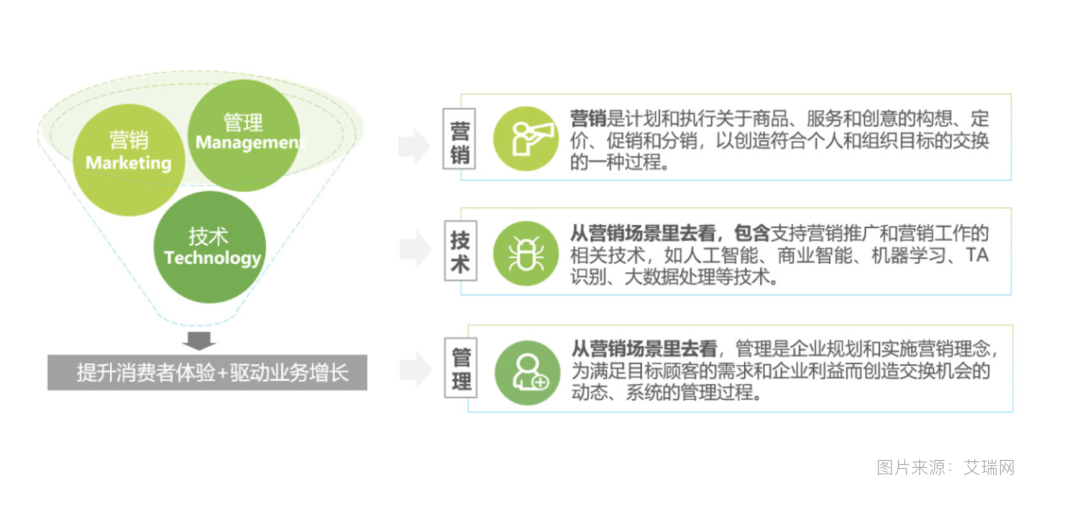
MarTech is the engine for building ourselves into a truly fully digital brokerage. Because digitalization happens from the outside in—it occurs on the basis of establishing online connections with clients. Starting from digital marketing, with the client at the center, it pulls all members of the brokerage—from the retail services department to the compliance and risk control department—into fully online digital collaboration.
Not Just Traffic Acquisition — Building Multi-Touchpoint Retail Services
We will continue to build our own App and use this self-operated entry point for client marketing and business development, but this is clearly not our only service touchpoint. Instead, we will invest in R&D to find MarTech approaches that meet industry compliance requirements, extending and embedding our service touchpoints into various third-party partner channels for compliant and controllable marketing, business development, and services. We will open virtual branch offices inside digital banks, digital shopping malls (e-commerce platforms), digital living communities (social platforms, lifestyle super-Apps)… opening them in the places closest to consumer clients. Isn't this the same principle as brokerages in the past opening branch offices in CBDs, commercial buildings, and other physical spaces?
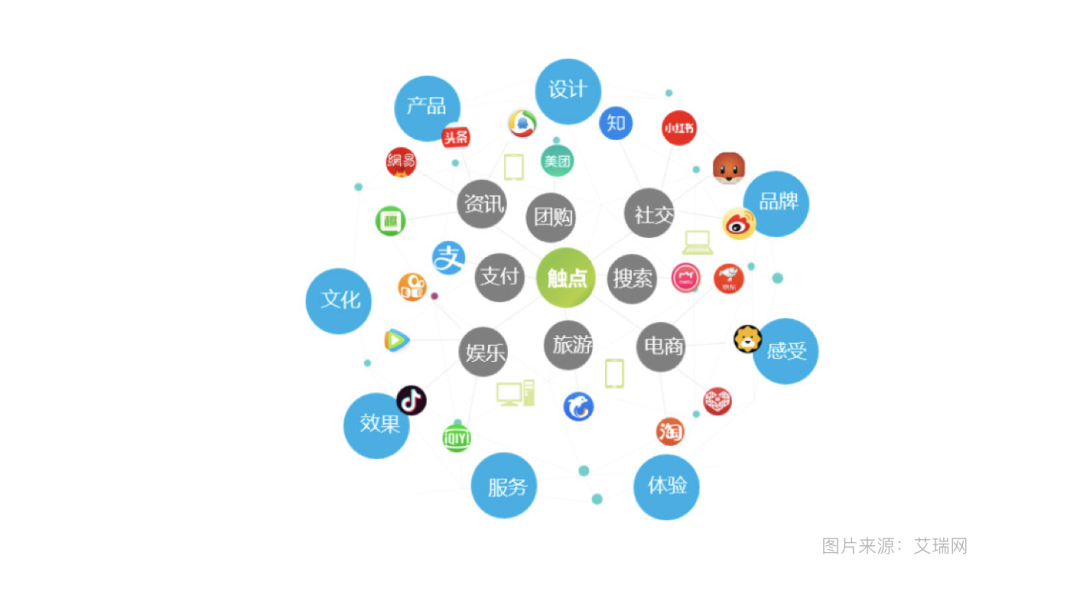
Perhaps entry points beyond our self-operated App will become increasingly important—or even more important—to us. We will adopt technologies like FinClip (opens new window) to uniformly manage all client touchpoints—uniformly publishing and unpublishing various digital scenarios, marketing campaigns, and services; using data from all touchpoints for unified identification and tracking of any user behavior; greeting clients at any touchpoint with the same algorithm for personalized content and service automation recommendations; and controlling any compliance risk at all entry points—taking down all touchpoints with one click when problems arise.
We expect that client activity may increasingly occur at third-party touchpoints, and ultimately we will use connectivity technologies to smoothly transfer clients' investment and trading behavior back to our self-operated App for completion.
Speed Is Supreme — Agile Digital Marketing Is the Key to Victory
Online marketing in the digital world is characterized by: fragmentation, urgent timelines, use of real-time data, and seamless connection to the "landing pages" that convert users. How technology supports agile marketing—enabling marketing operations staff to promptly "assemble" and "generate" various marketing campaign scenarios as needed and to monitor conversion of visitors layer by layer through online real-time monitoring tools—is the key to victory. When stock-trading Apps, counters, and trading systems are all highly homogenized, isn't differentiated competition simply about who has stronger, faster, and more frequent online operational capabilities and who provides more personalized and intelligent experiences to users?
"In all martial arts, speed is supreme"—this is even more so the principle of the digital age. Iterating an App through traditional technical architecture and engineering management methods—where every marketing campaign leads to additional code, regression testing, and re-release—cannot meet the demands of digital marketing.
We will use FinClip to build our own "App Store," turning our stock-trading App into a wealth management super-App with a built-in App Store, with 100% autonomous and controllable real-time publishing and unpublishing of various marketing tools, application features, and campaign scenarios. Through built-in gray release capabilities, we will control the scope of rollout—from clients under a certain branch in a certain region to groups matching certain profile characteristics—configurable and controllable at will.
Services with Warmth — Focusing on Online Consultation and Interaction with Investment Advisors
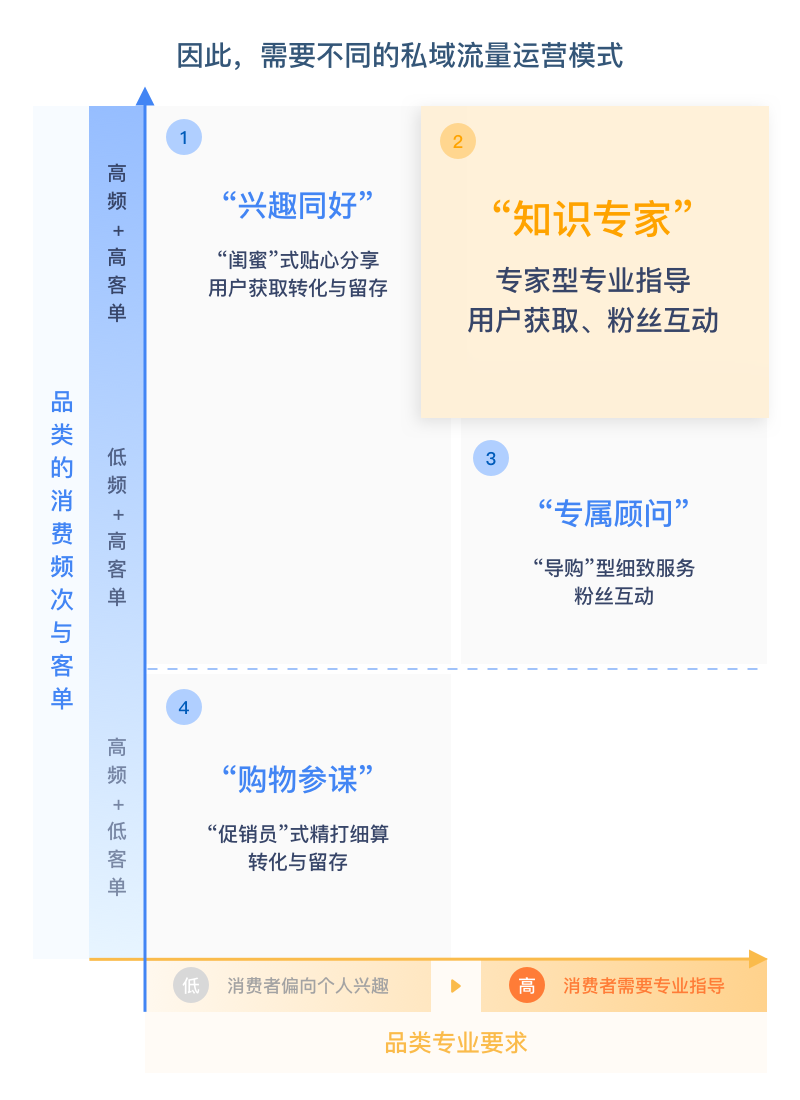
In the 2021 Private Domain Marketing White Paper co-authored by Tencent Marketing Insight and BCG, an analysis was made along two dimensions: "category purchase frequency and average ticket size" and "category professional requirements."
The wealth management product category is relatively high-frequency with a high average ticket size, and consumers need professional guidance.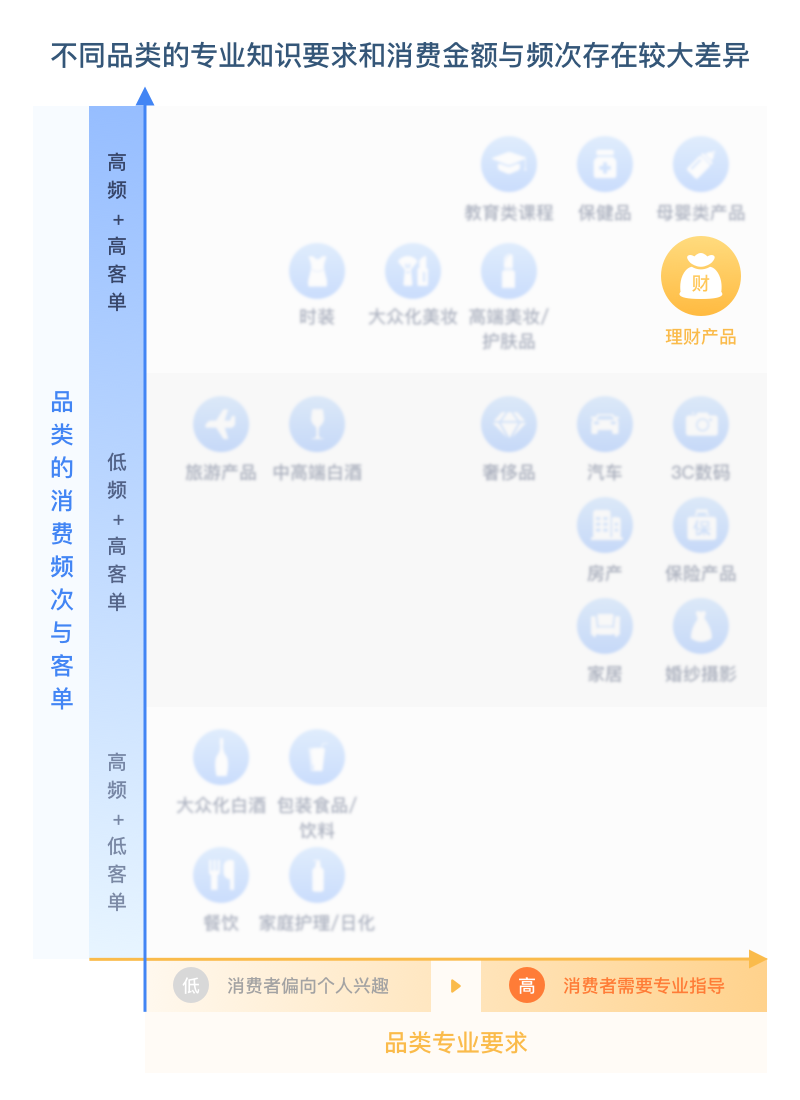
As for wealth management products, indeed as the report states, they are a category with high demand for surrounding knowledge and a long initial decision-making process.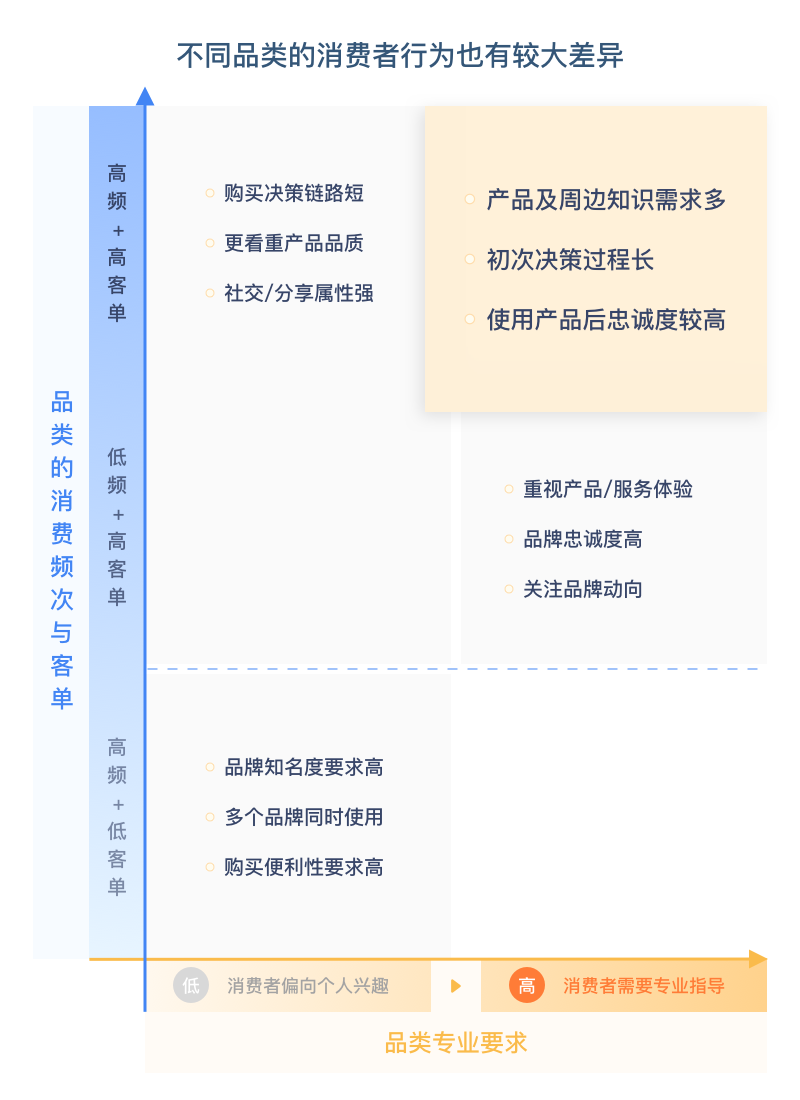
Such products typically require knowledge-based experts to provide professional consultation and interaction to consumers. Investment advisors are such experts—through market analysis, sharing of investment views, guidance and education of investors, interaction and Q&A in investment communities, and so on, they attract followers, conduct marketing through services, acquire clients through marketing, and provide continuous services to clients to build long-term trust relationships.
In response to this, what will we do? With an agile marketing technology platform in place and multi-touchpoint service entry points set up, the "last mile" to closing the final transaction needs to be completed by investment advisors and client managers assisted by intelligent tools and algorithms. This will be a semi-automated, semi-manual process.
The automated part involves building knowledge graphs covering all aspects of investment, trading, and wealth management, and continuously accumulating and optimizing the knowledge base—reducing the labor intensity of investment advisors providing consultation to consumers and improving their service efficiency to amplify their "one-to-many" service radius. In addition, various behavioral data generated during interactions between investment advisors and consumers are automatically analyzed to form real-time MOT (Moments of Truth) feedback to investment advisors for rapid marketing strategy adjustments. Finally, based on the consumer's trading history, behavioral preferences, and continuously updated profile from the current interaction, the system automatically suggests talking points, information, and the range of financial products suitable for recommendation to that consumer (automatically completing suitability matching).
The manual part is that investment advisors still need to communicate and interact with consumers, caring about clients' trading behavior in a timely manner—building relationships through care; presenting a trustworthy professional image through the "gaming equipment" our platform provides to investment advisors—trustworthiness brings trust; and ultimately through the appropriate combination of online communication tools and offline meetings—transactions arise through communication.
In wealth management, services with warmth will always be difficult to fully replace with algorithms and robots. Therefore, our development direction should be to continuously provide investment advisors with "augmented reality" (AR) tools. We use Jinyilian, another product from Fantai Geek, as the platform "foundation" for digital marketing to iterate these tools.
More Robust in the Cloud — Making Internal Organizations Virtual and Fully Online
As a "cloud-native" brokerage (an "internet native" enterprise that emerged after the birth of cloud computing), we not only naturally conform to the characteristics and principles of cloud computing in our technical architecture, but according to Conway's Law, we also design our organizational structure to match.
First, departmental organization is flat (a well-worn point). Second, through our instant messaging tool FinChat (opens new window), every member is online forming an internal "social network." Regardless of where individuals are geographically located, following the principle of "online integrating with offline," all communication and collaboration leave traces online to the greatest extent possible. OA office, email, and all other administrative systems and business management systems adopt cloud-native technology solutions, or at minimum are connected to chatbots in the instant messaging tool. Ultimately, the instant messaging tool forms a digital network jointly formed by humans and bots: the system can dispatch event notifications, reminders, and work orders to people through chatbots, while people can send collaboration requests or instructions to others or bots. Using the instant messaging tool as a human resource scheduling tool, all management or business events are dispatched as work orders, achieving event-driven enterprise operation. Third, various virtual organizations (teams, stores, branches) are built through the instant messaging platform—they can be dynamically formed around clients and business opportunities, responding quickly to market needs.
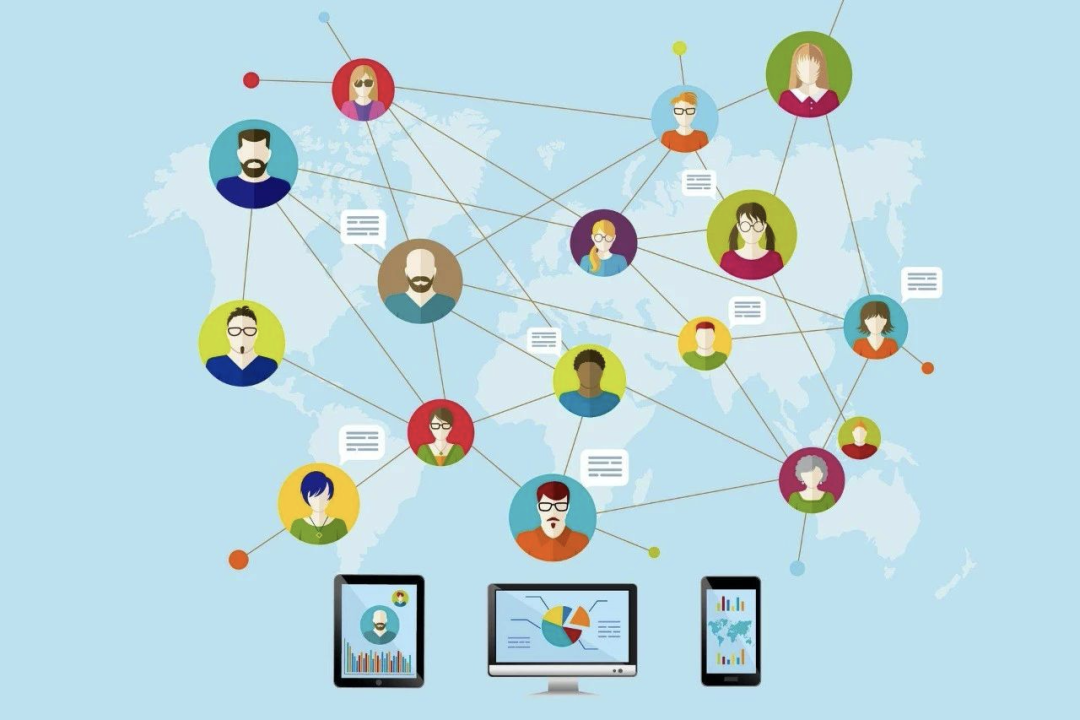
Internal digital collaboration is for more efficiently providing services externally. At the same time, the higher the degree of digitalization, the higher the degree of compliance and monitorability. For certain businesses, perhaps we will ultimately reach the stage of "real-time compliance"—compliance auditing is no longer an offline, after-the-fact matter, but an online step in the digital business process.
Forming a cloud-native, fully online digital organization has an additional benefit: it creates zero-contact external service capabilities and internal collaboration capabilities, providing robustness against pandemics or natural disasters.
Others Digitize for Me — Being a Brokerage with a Developer Community
Since we position ourselves as a technology company holding a brokerage license and subject to regulation, what we will obviously do is build our own developer community. Who are the target developers?
First, we have a DMA business, providing direct market access API services to buy-side institutions. So how do we serve buy-side institutional developers online, at low cost, and in a standardized and unified way? Through the developer community, we provide them with dynamic libraries, sample code, integration guides, joint debugging and testing mechanisms, go-live application process documentation, and digital certificate applications for accessing accounts…
Second, our trading software should be plugin-based, allowing certain institutions with strategy trading capabilities to develop strategy plugins for the trading terminal and test them in an isolated simulation environment…
Following Goldman Sachs' approach of "sell-side empowering buy-side," we may open cloud-based application service capabilities to buy-side institutions—for example, encapsulating interfaces for market data, information, compliance and risk control, and information disclosure, or even providing aPaaS (Application Platform As A Service) to support developers' secondary development and innovation, thereby establishing closer and more solid digital relationships with institutional clients.
In fact, our own IT R&D staff and outsourced developers are also developers. From the perspective of business applications, they are developing various application plugins for our SaaS services.
We have established a Developer Center, like any internet platform. Every developer here applies for and obtains their own Developer Account, along with corresponding developer digital certificates, security tokens, and securely isolated test environments. We connect clients, developers, and partners. In an interconnected online ecosystem, developers are the builders of all digital bridges.
Cultural DNA — Building a Management Team with a CTO and CMT
The realization of the above vision ultimately depends on the team and culture. Two positions must be elevated to the leadership ranks.
The CTO (Chief Technology Officer) is our technical architecture designer and the implementer of securities business digitalization. His mission is to persistently promote an engineer culture within the company, pursue the principle of cloud-first in designing and implementing business applications, be responsible for looking ahead, continuously leverage new technologies to enhance SaaS service capabilities, and build a digital connectivity ecosystem among regulators, trading venues, partners, and clients.
The CMT (Chief Marketing Technologist) is responsible for the organic integration and innovation of IT and marketing. He formulates digital marketing technology development strategies, selects and builds the MarTech technology stack, develops marketing touchpoints and establishes technical partnerships among thousands of internet companies and technology tool providers, explores MarTech application innovations that align with the compliance and regulatory characteristics of the securities industry, assists business departments in establishing digital marketing strategies and capabilities, extends digital service "tentacles" to every entry point in the digital world, and continuously improves the degree of marketing automation.
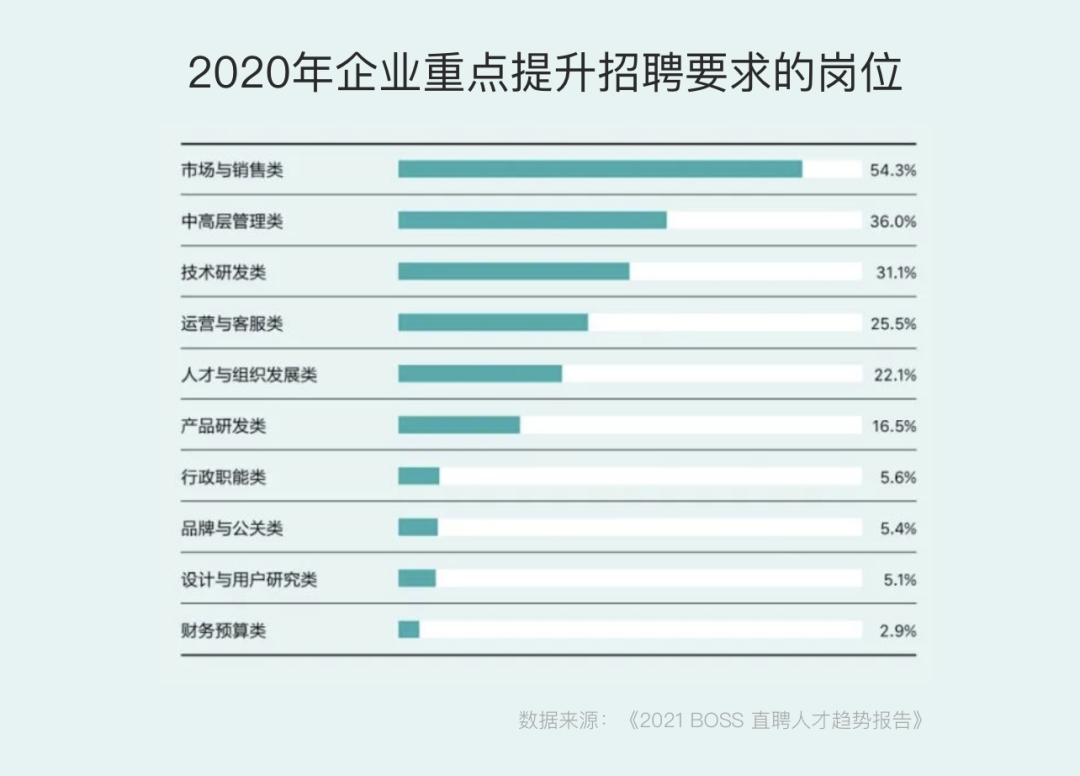
According to BOSS Zhipin's "2021 Enterprise Talent Demand Trend Survey," in 2020, 54.3% of enterprises focused on raising their requirements for marketing and sales candidates. Also in 2020, the position with the fastest-growing emphasis on data skills was marketing manager. This sufficiently demonstrates that enterprises are placing high demands on marketing personnel and are adapting to the new changes brought about by the penetration of MarTech.
In the future, as the MarTech market develops in depth, independent departments will gradually emerge. New organizations will integrate marketing, analytics, IT talent, and even engineers into one team, and composite talents with both technical literacy, data analysis, and marketing experience will become increasingly important.
At the same time, increasing the number of programmers also helps elevate the technology culture somewhat—just as at Goldman Sachs, where the IT scale exceeds that of many professional software companies.
No Bundled Suites — Envisioning an Industry Ecosystem with Biodiversity
The emergence of the imagined cloud-based brokerage above depends on certain industry environments and conditions. Among them, the formation and readiness of the securities industry cloud depends on the support of cloud service providers recognized by regulators under the exchange group, playing a vital role in promoting brokerage digitalization.
For small brokerages, after deducting hardware, data center, and legacy system maintenance costs from their current annual IT budgets, the space left for independent R&D and technological innovation is extremely limited. If infrastructure expenses could be saved through multi-tenant resource sharing on the industry cloud, there might be hope of investing more budget into independent R&D related to business innovation, bringing about technological innovation. If the industry cloud platform also carries a series of "regulation-as-a-service" and compliance technology infrastructure from regulators, enabling "regulation online" and "compliance online," then market operating institutions, industry self-regulatory organizations, regulators, and other industry-related organizations would form a digital ecosystem of interconnected online links with each other, greatly promoting the improvement of overall industry efficiency.
The industry cloud serves as a many-to-many compliant hub for interconnection between the securities industry and the external digital world. It ensures that all digital connections inside and outside the industry are uniformly traced and monitors any potential connection risks. It helps industry operating institutions "go global" to achieve digital marketing and business development, while also being able to "bring in" technology tools (such as MarTech-type technologies and services)—by applying to be listed on the industry cloud, they may be confidently used by industry operating institutions. This is also very attractive to many technology companies targeting the securities industry.
The existence of the industry cloud also helps more small and medium-sized technology companies focus on a specific niche segment and each perfect their own technology tools, making one innovation point thoroughly developed and providing it as a cloud service for brokerages to integrate and use. This avoids the dilemma of doing customized integration for each client one by one and degenerating into outsourced project implementation. At the same time, brokerages have more technology choices, using rich technology tools and services to "assemble" their own business applications based on innovation needs—no longer forced to eat "bundled suites" or adopt some single vendor's cumbersome and bloated "hodgepodge" technology, moving forward with shackles on.
MarTech-type technologies have spawned 8,000 companies globally in just the past decade, most of them cloud-based. Can the development of the industry cloud also promote an innovation explosion of regulatory technology, compliance technology, marketing technology, and so on in the securities industry—breaking monopolies, enabling a leap in the digitalization level of the entire industry, and allowing brokerages and fund management institutions to benefit and rapidly increase their technology content?
Iterate or Reinvent?
Although candles and electric lights are both lighting tools, no amount of craftsmanship optimization and iteration on candles will produce an electric light. Even Nokia ultimately did not iterate its way to the iPhone, although the difference between feature phones and smartphones is far less than the gap between candles and electric lights.
There is a saying: in the digital age, everything that can be reinvented will be reinvented, including the wheel. So-called "digital-natives" enterprises, as McKinsey calls them, will view the existence of all traditional-form enterprises as opportunities for disruption. For licensed institutions with entry barriers and strict regulation (and protection)—will they digitally transform themselves, or become objects of digital reinvention by others?
In an era where artificial intelligence is on everyone's lips, encrypted digital assets are emerging, decentralized technologies are increasingly influential, and digital natives are becoming the main body of investment and wealth management—what would a digital brokerage look like if conceived from first principles?
Betting heavily on technology is never wrong—the question is how to bet.